
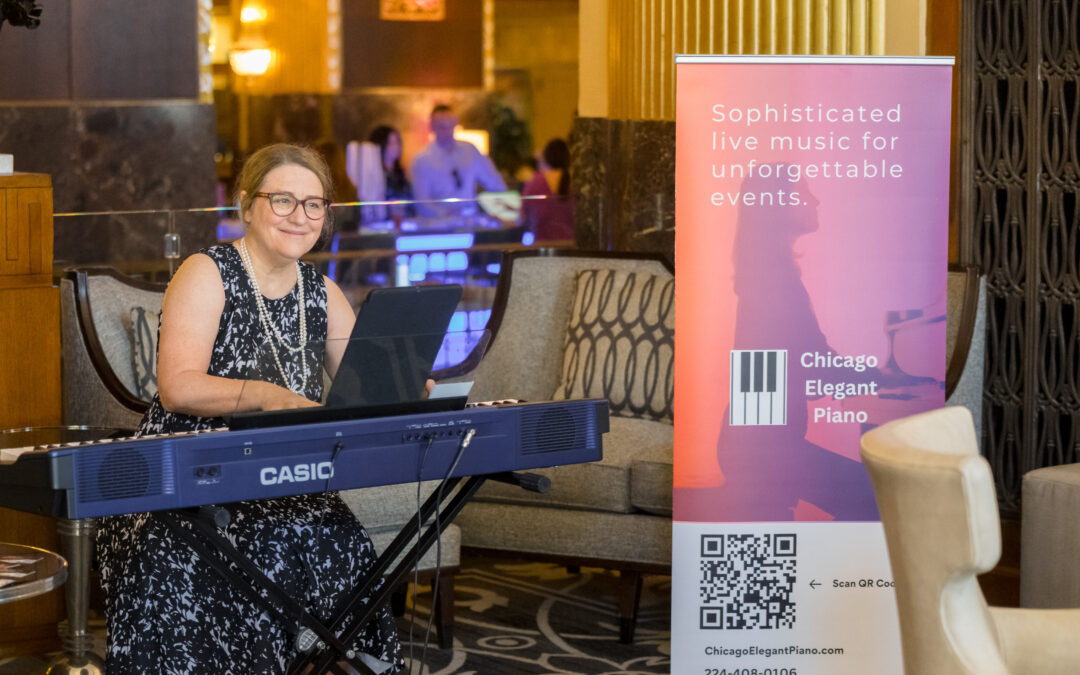
I am sitting here with a massive smile on my face, a warm cup of coffee in my hand, and a heart full of pride. Today is one of those “full circle” days that makes every year of teaching feel like a gift. In just a little while, I’m headed out to have lunch with one of my former students, and I can hardly wait to hear all about her latest adventures.
She has been teaching in the Chicago area for four years now, and let me tell you, she is absolutely crushing it! She’s a powerhouse multi-instrumentalist who studied violin performance, music production, and music business in college. Now, she’s at that exciting stage where she’s looking to take everything she’s learned and start her own business. Seeing her “up and running” is the ultimate reward.
But as I was getting ready for our lunch, I started thinking: How did we get here? What was it about her early lessons that helped her transform from a young student into a professional musician and entrepreneur?
The answer, I believe, lies in creative teaching. Specifically, it’s about giving students the tools to stop just reading music and start creating it.
Breaking Free from the “Sheet Music Cage”
Have you ever felt like your musical growth was stuck behind a wall of black and white notes? It’s a common frustration. So many students (and even teachers!) feel “chained” to the sheet music. If the page isn’t in front of them, the music stops.
That’s exactly what I wanted to change in my piano and orchestra teaching career. I didn’t want my students to just be “repeaters” of music; I wanted them to be creators.
To do that, I realized I had to bring improvisation and composition into the very first lessons. We didn’t wait until they were “advanced” to start being creative. We started on day one! By showing students how to improvise over simple chord patterns: like the classic 12-Bar Blues or soulful fiddle tunes: the world of music suddenly became a playground instead of a lecture hall.
Why Improvisation is a Superpower
When a student learns to improvise, something magical happens in their brain. Scientific research actually shows that improvisation deactivates the “self-monitoring” part of the brain. You know that little voice that says, “Wait, was that a wrong note?” or “You’re not good enough to play this”? Improvisation helps turn that voice off!
By deactivating self-judgment, students enter a “flow state” where they can explore:
- Vibrant Creativity: They learn to think outside the box and solve musical “puzzles” on the fly.
- Deep Listening Skills: Especially in group settings, they have to listen to what others are playing to react in real-time.
- True Confidence: Nothing builds confidence like realizing you can make up a beautiful melody all by yourself!
I’ve seen this first-hand with my Flexible Fiddling methods. When we take a simple tune and ask a student, “What if you changed the rhythm here?” or “What if you added a slide there?”, their eyes light up. They aren’t just playing a song anymore; they are expressing their soul.
Creating Over Consuming: The Battle Against “Mindless Scrolling”
Let’s get real for a second. We live in a world of “mindless scrolling.” It is so easy for kids (and adults!) to spend hours on apps, letting life pass them by in a blur of 15-second videos.
But here’s the most heartwarming part of my career: my students choose the music.
I’ve heard so many stories of my former students spending their school recesses or long weekends huddled around a piano or with their violins, working on a new composition or jamming on a blues riff. They weren’t looking at screens; they were looking at each other. They were building a sense of community through the notes they created together.
When you give a student the tools to compose: which is something I’ve always loved doing, writing custom music specifically tailored to a student’s level and interests: you give them a sense of ownership. That music belongs to them. Why would they want to scroll through someone else’s life when they are busy building their own masterpiece?
From the 12-Bar Blues to a Chicago Career
The student I’m meeting today is the perfect example of where this creative foundation leads. Because she wasn’t afraid to experiment with 12-Bar Blues or dive into music production, she developed a “can-do” attitude that carried her through a rigorous college program and into the professional world.
She didn’t just learn how to play the violin; she learned how the music works. She learned the business, the production, and the art of teaching. She is a multi-instrumentalist because her curiosity wasn’t stifled by rigid rules: it was encouraged by creative freedom!
If you’re a student or a parent feeling a bit burnt out by the “standard” way of learning, I want you to know that everything is spelled out for you to find that joy again. You don’t have to be a genius to improvise; you just need a friendly guide and a few simple chord patterns to get started.
How You Can Start Your Creative Journey Today
You might be wondering, “But Jenny, I don’t know where to start!” Don’t worry: I’ve got you covered. Whether you’re interested in ukulele, piano, or violin, the path to creativity is much shorter than you think.
- Start with the Basics: Learn a simple 3-chord progression.
- Give Yourself Permission to “Fail”: There are no “wrong” notes in a jam session, only “interesting” ones that lead to the next idea!
- Ask for a Simple Starting Plan: If you want help choosing chords, picking a first improv pattern, or starting lessons, head to my Contact page and send me a quick note. I’m happy to point you in the right direction!
- Find Your Tribe: Music is meant to be shared. Whether it’s with a teacher, a friend, or a family member, creating music together builds bonds that last a lifetime.
The Value of Community and Connection
At the end of the day, my business, Jenny B Peters, isn’t just about teaching notes on a page. It’s about fostering a sense of community. It’s about the joy of that lunch meeting today: seeing a former student grow into a colleague and a friend.
Music is a language, and improvisation is the conversation. When we teach our children how to speak that language freely, we are giving them a gift that outlasts any app or smartphone. We are giving them a way to connect with themselves and the world around them in a deeply meaningful way.
And here’s one of my favorite ways to build that connection fast: playing music that feels like it belongs to you. If you want to see what that looks like in real life, check out my Original Compositions—pieces I’ve written (and adapted) to help students learn specific skills while still sounding vibrant, musical, and fun.
Everything we do is “kid-tested” and designed to take the guesswork away, so you can focus on what really matters: the music.
I’ve got to run now: my lunch date is waiting! I can’t wait to see what this amazing young woman does next. And I can’t wait to see what you create when you finally let go of the sheet music and let your imagination take the lead.
Are you ready to start your creative journey?
Let’s make some music!