
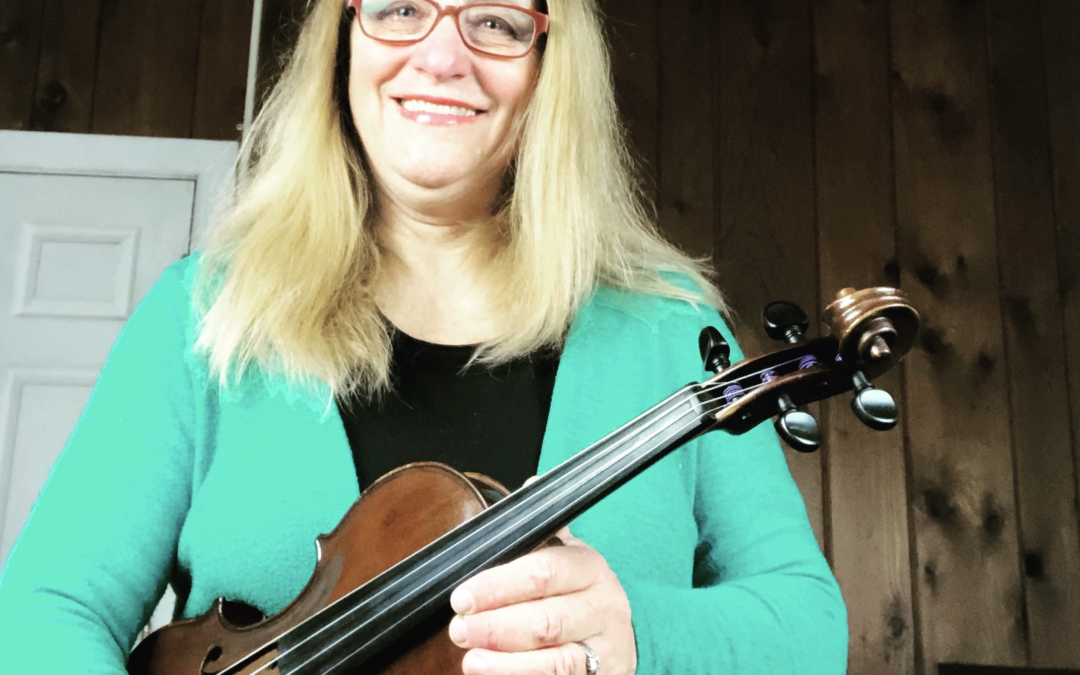
ASTA was such a good time. Like, “I lost my voice from talking shop with orchestra teachers” good.
If you couldn’t make it (or you just want the highlights without the conference coffee), here are the big takeaways from my session on Flexible Fiddling—aka, how to turn your bowed-strings classroom into a jam session without needing a perfectly balanced ensemble or a magical unicorn budget.
And quick context: I’ve spent 25 years in public school orchestras. I’ve had the “perfect” year where the instrumentation is balanced, the kids are focused, and the concert goes off like a movie montage.
I’ve also had the year that was basically three violins, a heroic viola, and one cello with a case held together by hope. (You know the year.)
So when I say you can make this work with your group—yes, even that group—I mean it.
Walking the halls at ASTA, the energy was absolutely electric. It was so inspiring to connect with so many passionate orchestra teachers and share the vision of Flexible Fiddling. For those who couldn’t make it (or want a refresher), here are the key takeaways from my presentation.
Walking through the halls of the conference this year, the energy was absolutely electric. There is something so soulful and vibrant about a group of string teachers coming together to reimagine what the modern music classroom can look like. We’ve all been there: feeling a bit “chained to the sheet music,” wondering how to spark that extra bit of magic in our students. My session was all about breaking those chains and turning your daily rehearsals into high-energy jam sessions.
If you’ve ever felt like your students are just going through the motions, or if you’ve struggled to keep them engaged with traditional repertoire, this post is for you. We are moving beyond the notes on the page and into the world of creative freedom and lifelong musicianship.
The Heart of the Presentation: What is Flexible Fiddling?
At its core, Flexible Fiddling is a mindset. It’s the belief that every student, regardless of their technical level or the specific “balance” of your instrumentation, deserves to feel the groove.
Do you have fifteen violins and only one lonely cello? Or maybe a room full of violas and a single bass? In a traditional setting, that’s a nightmare. In a jam session setting, it’s an opportunity! By focusing on the roles of the music rather than strict orchestral seating, we can make any group sound like a powerhouse.
Conference Highlights & Frequently Asked Questions
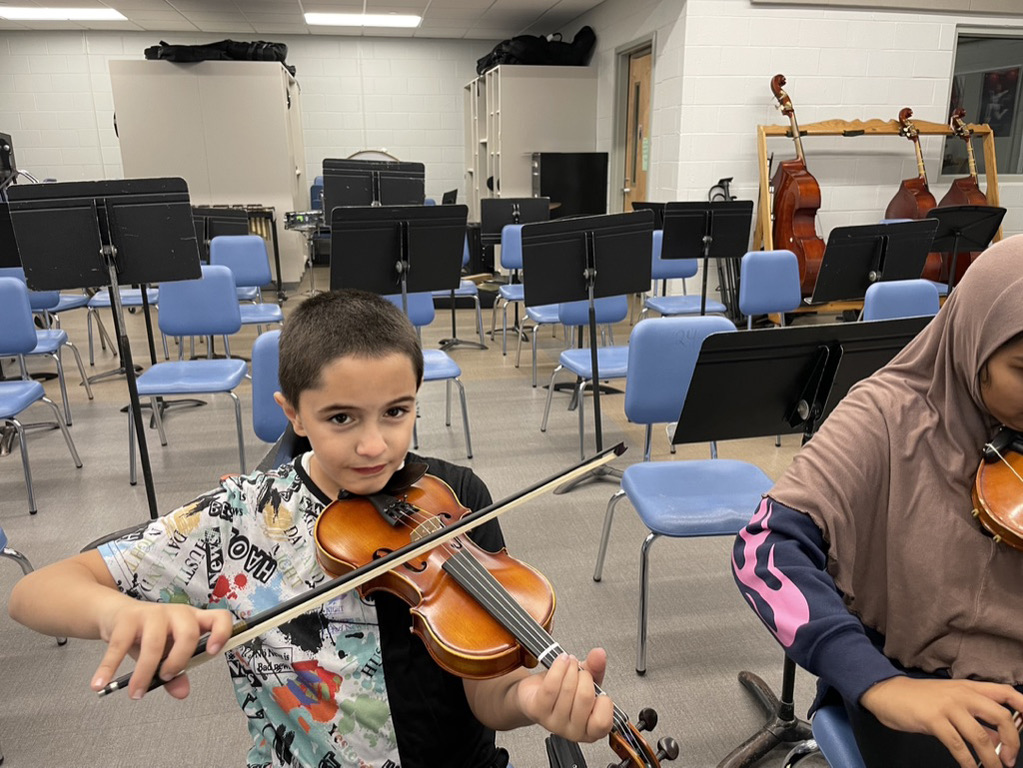
During the session, I had some wonderful conversations with teachers who were eager to bring these ideas home. I’ve compiled the most frequent questions and key concepts into this “Conference Highlights” section to help you get started.
Q: What if I don’t have a “complete” orchestra?
This is the number one concern I hear! And here’s the good news: in Flexible Fiddling, the bowed strings are the stars of the show. Violins, violas, cellos, and basses are the primary focus of the jam—because they can cover everything we actually need to make a room feel like it’s grooving.
Instead of stressing about “perfect” instrumentation, we break the music down into three essential jobs. And your string sections slide into these roles beautifully:
- The Melody (usually your violins—sometimes violas, too): This is the “singer” of the group. Your violins can carry the tune, your violas can double it for a darker color, and you can even trade the melody around so more kids get that “front of the band” moment.
- The Backing (often violas + 2nd violins, but truly anyone): This is the “meat” of the sound. Chops, rhythmic bowing patterns, open-string drones, easy double stops—this is where your middle voices become the engine that makes the whole thing feel vibrant and alive.
- The Bassline (cellos + basses whenever possible): This is the heartbeat. If you’ve got basses, amazing—let them be the hero down low. If you don’t, cellos can absolutely own this role. And if cellos are thin, violas can jump down to their lower register and hold it down in a pinch.
And yes—other instruments like guitar, piano, or drumset are fantastic guests and are always welcome to join the jam! I just like to present them as supporting additions (extra sparkle, extra groove, extra “wow”) rather than the main event. The core sound—and the confidence-builder for your program—comes from your bowed string sections learning to function as Melody, Backing, and Bassline.When you stop worrying about “Second Violin Part B” and start thinking about “Who is playing the groove?”, the classroom dynamic shifts instantly. It becomes collaborative, not just repetitive.
Q: What tools do you recommend to keep the groove going?
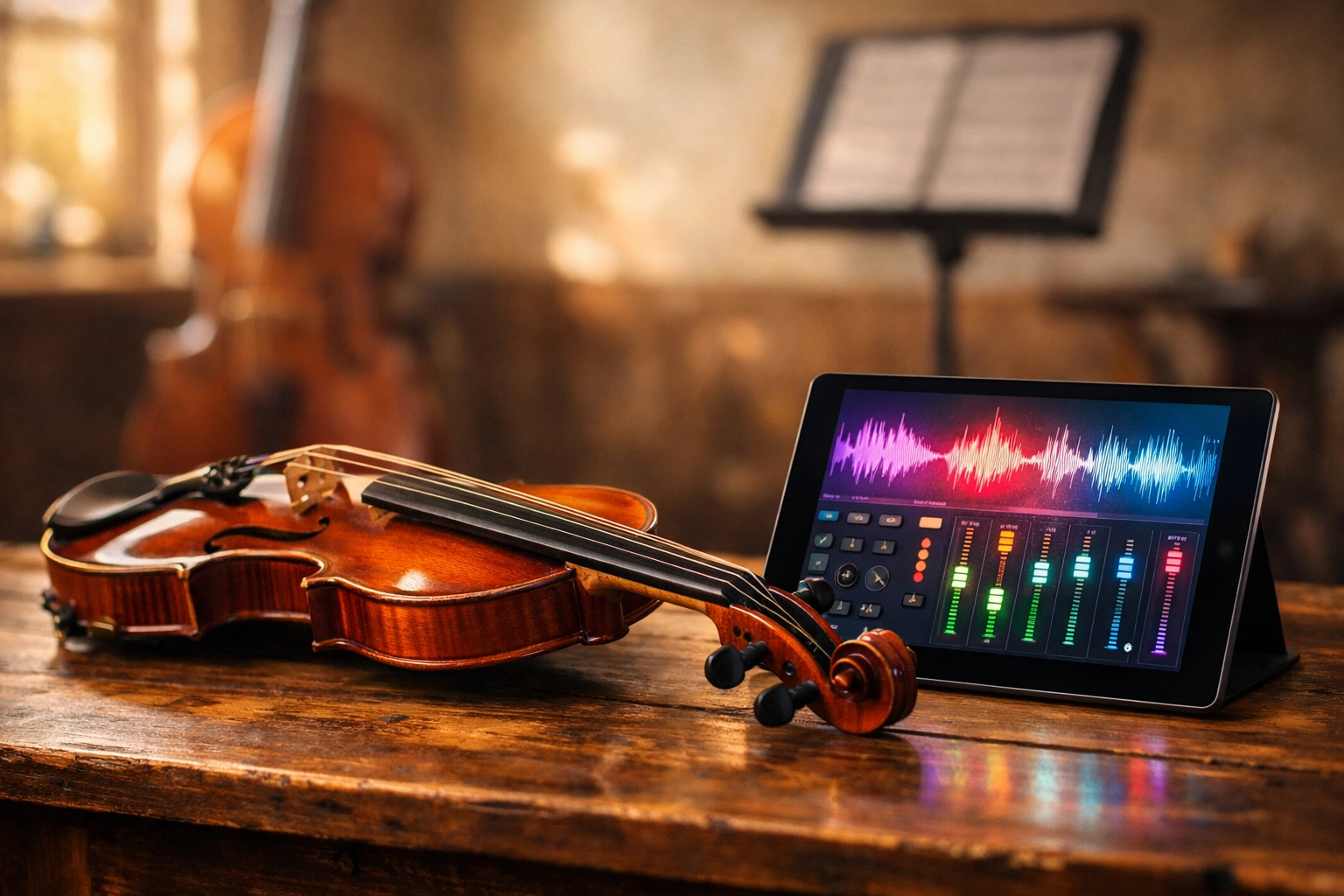
To keep the momentum alive, you need a steady, inspiring beat. Metronomes are great for practice, but for a jam session, we want something that feels vibrant and alive. I highly recommend two specific apps that I use in my own studio and classroom:
- Strum Machine: This is an absolute game-changer. It provides high-quality, realistic backing tracks for thousands of tunes. You can adjust the speed, change the key, and even customize the arrangements. It makes your classroom feel like a real bandstand.
- iReal Pro: This is a staple for anyone looking to dive into jazz, blues, or pop styles. It gives you the chord charts and a customizable rhythm section. It’s perfect for practicing those “Micro-Improvisations” we talked about at the conference.
-
- iReal Pro: This is a staple for anyone looking to dive into jazz, blues, or pop styles. It gives you the chord charts and a customizable rhythm section. It’s perfect for practicing those “Micro-Improvisations” we talked about at the conference.
Q: How do I teach improvisation without it feeling scary?
Improvisation shouldn’t feel like diving into the deep end of a cold pool. It should feel like a conversation. I recommend starting with “Micro-Improvisations.”
Don’t ask a student to “solo” for 32 bars. Instead, try call-and-response games.
- The One-Note Challenge: Have a student improvise a rhythm using only one note over a backing track. It removes the fear of playing a “wrong” note and focuses entirely on the “groove.”
- Question and Answer: You play a short phrase (the question), and the student plays a phrase back (the answer). It builds their ear and their confidence simultaneously.
Q: How can I feel more confident leading this if I wasn’t trained this way?
This was the most emotional part of our ASTA discussion. Many of us come from a strictly classical background where “improvisation” was a four-letter word!
Here is the secret: Being vulnerable is a superpower.
When you sit down with your instrument and tell your students, “I’m learning how to jam right along with you,” you are modeling exactly what it means to be a lifelong learner. You don’t have to be a jazz master to lead a jam session. You just have to be willing to try. Your students will respect your honesty, and it creates a safe space where they feel they can take risks, too. For more on this journey, you can check out some of my previous articles on teacher mentorship.
The Emotional Impact: Why This Matters
Music education isn’t just about preparing for the next concert; it’s about giving students a skill they can use for the rest of their lives. When we teach them how to jam, we are giving them the keys to the kingdom. They can walk into a bluegrass circle, a garage band, or a church group and know exactly how to fit in.
I’ve seen students who were on the verge of quitting strings suddenly light up when they realized they could play their favorite pop song by ear or “shred” a solo on a folk tune. It’s about freedom, confidence, and joy.
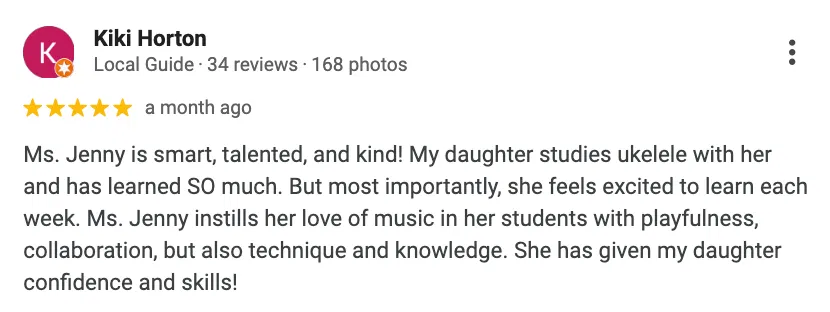
As teachers, we have the incredible privilege of fostering that growth. It was so rewarding to hear from parents at the conference (and through my reviews!) about how this approach has changed their children’s relationship with music.
Take the First Step Today
You don’t need to overhaul your entire curriculum by Monday morning. Start small. Pick one day a week: maybe “Fiddle Friday” or “Jammin’ January”: and try one of these techniques.
- Download Strum Machine and play a simple D-Major drone while your students explore different rhythms.
- Try a Micro-Improvisation call-and-response during your warm-ups.
- Rearrange a simple piece your students already know into Melody, Backing, and Bassline groups.
Everything you need to get started is accessible. You don’t need a PhD in jazz: you just need a sense of adventure!
Looking Ahead
The ASTA Conference was a reminder of why we do what we do. We are part of a massive, supportive community of educators who want the best for our students. If you’re looking for more resources, I invite you to explore the articles section of my website, where I dive deeper into specific pedagogical strategies and repertoire ideas.
Let’s keep the conversation going! Did you attend the session? What was your biggest “aha!” moment? Or, if you’re just hearing about this now, what’s the one thing you’re most excited (or nervous!) to try in your classroom?
Remember, the goal isn’t perfection; it’s participation. Let’s get those classrooms grooving!
Happy Fiddling!
Want to learn more about my teaching philosophy or book a workshop for your school district? Feel free to visit the homepage or reach out directly. Let’s make music education fun, flexible, and fearless together!